LED Sign Modules and Power Supplies in Texas
Texas businesses across fuel and convenience, oil and gas, retail and healthcare rely on visible, dependable illuminated signage. This state guide connects verified electricity data with metro level market context and TMT LED product education for channel letters, sign cabinets, fuel signage and exterior commercial identity across the state.
Metro Guides in Texas
Texas sign work concentrates in three metro corridors, each with a distinct demand profile. Every metro guide applies the same verified state rate benchmark with market context written for that metro.
Dallas-Fort Worth-Arlington
Massive population, corporate, logistics, retail, restaurant and construction growth creates one of the nation’s largest sign markets.
Open the Dallas metro guide
Houston-The Woodlands-Sugar Land
Energy, ports, healthcare and industrial demand in Houston sustains one of the largest concentrations of illuminated commercial identity in the state.
Open the Houston metro guide
Austin-Round Rock
Technology, hospitality and rapid growth in Austin drive steady new construction signage alongside retrofit work across established retail corridors.
Open the Austin metro guide
What Electricity Costs Mean for Texas Signage
The April 2026 average commercial electricity price in Texas was 8.35 cents per kWh, compared with the U.S. commercial average of 13.51 cents per kWh. EIA values are preliminary state averages and are not a local utility quote.
Annual Planning Example
A 900 W demand reduction running 12 hours per day removes 3,942 kWh per year. At 8.35 cents per kWh, that is roughly $329 per year in energy alone.
Planning example only. Assumes a 900-watt demand reduction, 12 operating hours per day and 365 operating days per year. Excludes demand charges, taxes, delivery charges, labor, maintenance, rate escalation and incentives.
Five Year View
The same reduction is worth about $1645 across five years.
Planning example only. Assumes a 900-watt demand reduction, 12 operating hours per day and 365 operating days per year. Excludes demand charges, taxes, delivery charges, labor, maintenance, rate escalation and incentives.
Plan a Texas LED Sign System
Calculate module quantity, total wattage, power-supply loading and estimated operating cost for your sign.
Open the CalculatorPriority Sign Markets in Texas
Statewide demand concentrates in the categories below, with high value formats including gas station canopies and price signs, channel letters, cabinet signs, pylon signs, truck stops, dealerships, hospitals and warehouses. Market priority for this state: Very High.
Fuel and convenience
Around-the-clock price signs and canopy fascia make fuel retail the state's most energy exposed sign category.
Oil and gas
Corporate campuses and field service brands maintain identity programs across every producing basin.
Retail
Strip centers and anchor frontage along every interstate corridor keep channel letter demand constant.
Restaurants
Franchise rebrands and drive-thru upgrades cycle illuminated signage faster than most categories.
Healthcare
Hospital systems run campus wayfinding and identity that must stay lit without interruption.
Logistics
Distribution growth along I-35 and I-45 adds warehouse identity and high-mounted building letters.

TMT LED Education for Texas Sign Work
Lead with heat, storms, surge protection, 12V/24V design, large cabinets, fuel-site uptime, module-count reduction and total installed cost. The product principles are national; this page applies them to Texas conditions and economics.

Modules: Buy Light, Not Watts
Compare modules on lumens per watt and beam behavior rather than wattage alone. Large Texas cabinets and pylons reward high output modules with wide beams, while narrow letter strokes call for compact modules at tight spacing. Details and documentation cited specs: LED Signage Modules.
Power Supplies: Load Correctly
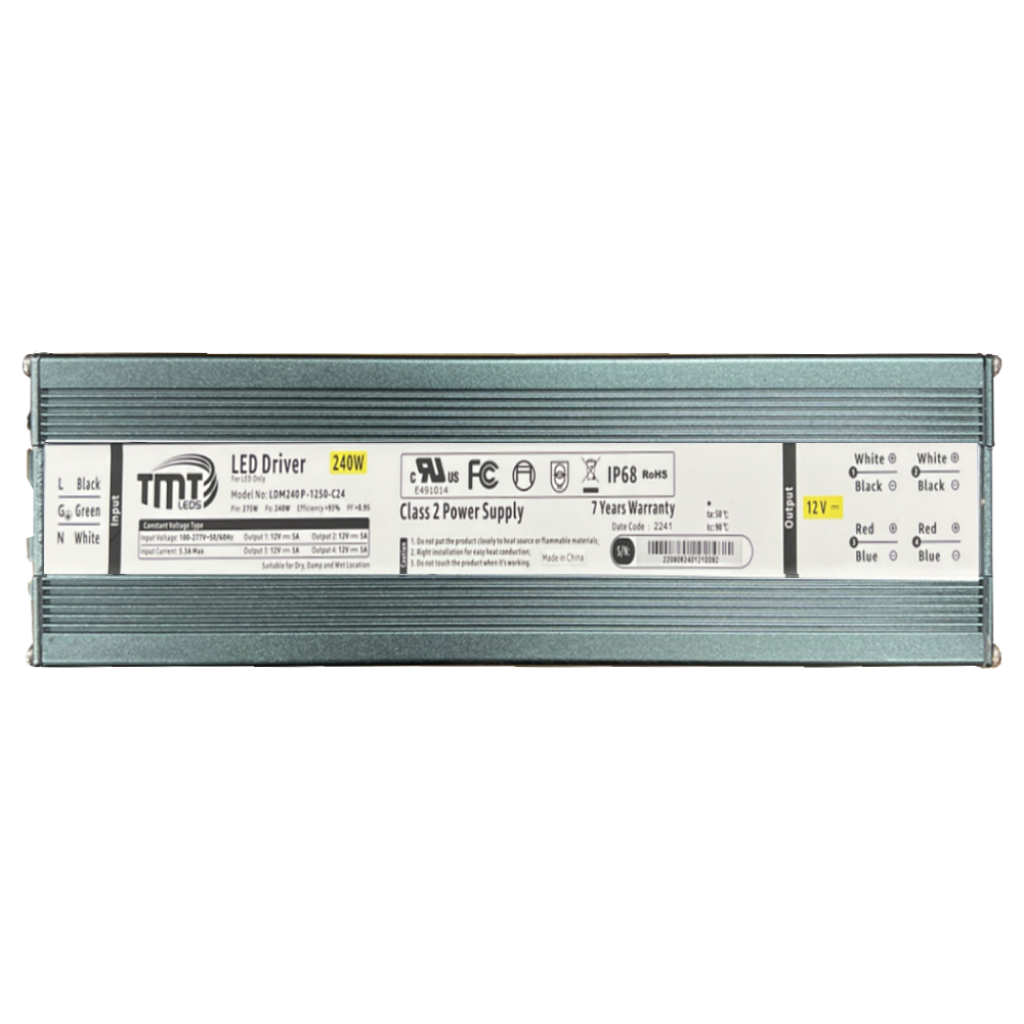
Texas grid events and storms reward surge protected, conservatively loaded Class 2 supplies, and 24V designs manage voltage drop on long canopy and pylon runs. Product selection must be based on the specific power supply's listed environment, enclosure rating, electrical classification, installation method and applicable code requirements. Start with the Power Supply Buyers Guide.
Sources and Methodology
Exact sources: U.S. EIA, Electric Power Monthly, Table 5.6.A, average price of electricity to ultimate customers by state, April 2026 preliminary, released June 25, 2026 (EIA table 5.6.A). Savings values use the standardized planning model documented beside each figure. Industry and metro characterizations derive from the TMT LEDs 48-state market analysis; establishment and employment statistics for sign manufacturing will publish from U.S. Census Bureau, County Business Patterns 2023, NAICS 339950 (CBP 2023 datasets) once the verified pull is loaded. Product statements cite TMT LEDs USA documentation. Standards: Source Policy.
Electricity Data Status
Period: April 2026, preliminary. Released: June 25, 2026. Reviewed for this page: July 12, 2026. Next review: on the following EIA Electric Power Monthly release; this page updates monthly as new state averages publish. Status: current.
Frequently Asked Questions: Texas
What is the commercial electricity rate in Texas?
The April 2026 average commercial electricity price in Texas was 8.35 cents per kWh, compared with the U.S. commercial average of 13.51 cents per kWh. EIA values are preliminary state averages and are not a local utility quote. Enter 8.35 cents per kWh, or your actual tariff, in the LED ROI Calculator for Texas planning estimates.
How large is the energy opportunity for a typical sign upgrade?
The standardized example reduces demand by 900 watts across a sign system. Over 12 hours per day and 365 days per year that removes 3,942 kWh annually, worth about $329 at the state average commercial rate and roughly $1645 across five years. Planning example only. Assumes a 900-watt demand reduction, 12 operating hours per day and 365 operating days per year. Excludes demand charges, taxes, delivery charges, labor, maintenance, rate escalation and incentives.
Why do LED economics still matter with a below average rate?
Texas pays less per kWh than the national average, but its signs often run bigger, hotter and longer than the national norm. Pylons, fuel canopies and large cabinets multiply the wattage in play, so efficiency gains scale with sign size even when the rate is modest, and module count reduction lowers installed cost independent of the electric bill.
What should Texas installers plan for in this climate?
Extreme heat, UV, thunderstorms, hail, hurricanes and grid events favor efficient modules, surge protection and conservative loading. These are design considerations, not blanket product claims. Product selection must be based on the specific power supply's listed environment, enclosure rating, electrical classification, installation method and applicable code requirements. Local electrical code governs final installations.
Join the Conversation and See What Is Next
LED Professionals Forum
Trade layout questions and retrofit results with sign professionals nationwide in the upcoming LED Professionals Forum at LED Knowledge Center.
New From TMT: Linera Series
Stay tuned for new products and solutions like the upcoming Linera Series border lighting profile. Preview it at TMT Linera Border Lighting Profile.
Plan a Texas LED Sign System
Calculate module quantity, total wattage, power-supply loading and estimated operating cost for your sign.
Open the CalculatorLearn more by visiting LED Knowledge Center for Sign Makers, covering Modules, Power Supplies and ROI. Questions about a Texas project? Reach the team at Contact Us at LED Knowledge Center.